

Mary Rose Museum
In December last year I made a big move - I gave up the lease on my studio and moved my business into my front room at home. I’d had a studio for 9 years, and for the whole of my stint as a full-time creative, so it was a daunting change. I would no longer have any sort of barrier between my personal life and my work.
I’m known to be a workaholic, I’d always bring work home and often went into the studio even on supposed days off, so the first thing anyone said when they heard I was moving was “won’t you just work all of the time?”. My mum was one of these people, worried that I would never leave the house, and so for Christmas she resolved to help out - and bought me a National Art Pass. This was so I could take frequent free or cheap trips over the year to help get me out and about and away from my desk.
It’s worked pretty well, and since December I’ve tried to use it as much as I can. I’ve been to a couple of National Trust properties, some tiny museums and some exhibitions, but the thing I’ve used it for most is visiting a very local attraction - the Historic Dockyard, right here in Portsmouth.
I’m no stranger to the Dockyard. In fact I worked there for 4 years, and used to have a site pass. But like most people, I didn’t fancy spending extra time at work, and rarely visited outside of my working hours. So when I found out that the Dockyard is part of the Art Pass scheme, I resolved to go as a visitor rather than an employee. It’s been great to be able to come and go as I please, and I have taken the opportunity to pop in and see little bits here and there.
This visit was actually for a work purpose. I needed to visit to have a look at the Mary Rose Museum to try and work out how to draw the original boat for a new Making History kit design. I’ve been having difficulty as there is only one contemporary portrait, which is not very detailed, and all of the more modern replicas and portrayals seem to have contradictory features, so I couldn’t work out how it should look from online resources.
At the Museum I found out why - even the academics are not in agreement about what it looked like! Even though they have the preserved Mary Rose pieces (which form the base of the museum) this only constitutes part of the ship, and much of it is missing.
I was specifically interested in the top decks, as these are the main ones visible on my design, and apparently there is debate about how many layers of deck there would have been, as well as how the ship would have been decorated. This is what has led to different interpretations and illustrations. Below is the information I found at the museum:
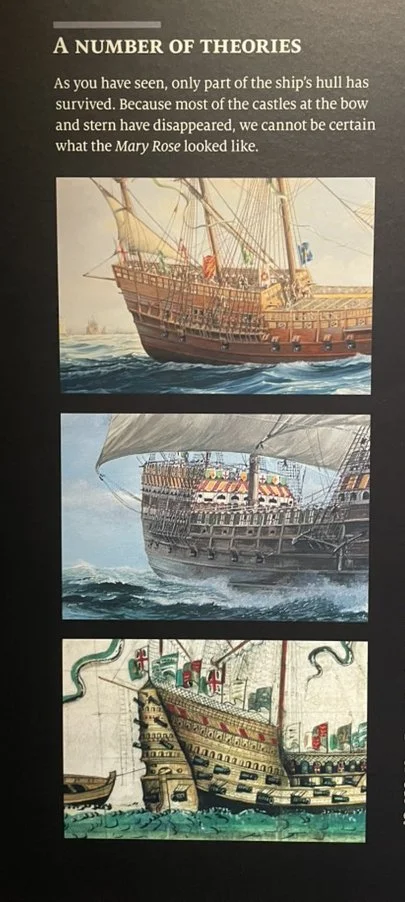
“What did the Mary Rose look like?
The model (below left)… shows a fairly sleek version of the Mary Rose, like the galleons of the late-sixteenth century. It has a main gun deck, and upper gun deck and, in the stern, one more gun deck that is open to the skies. This interpretation - which is also shown in the drawing (top left) - is also favoured by some archaeologists because it is based on the height of the timbers at the front of the sterncastle as found on the wreck. There is no evidence that these timbers went any higher or were heightened by attaching other timbers.
The drawing in the (centre left) is another interpretation. Here another deck has been added in the stern but it doesn’t reach all the way to the side of the ship. This means it still matches the surviving evidence but it also satisfies scholars who think there must be another deck in the stern for all the guns……However, some scholars think the ship was even taller with more decks. The version (below right) shows two full decks in the stern. Some people think there may have been another deck above that. Certainly the Anthony Roll drawing shows a very high stern, but we do not know if this was an accurate sketch or if it used a lot of artistic license.”
- Information board at the Mary Rose Museum, Portsmouth Dockyard.
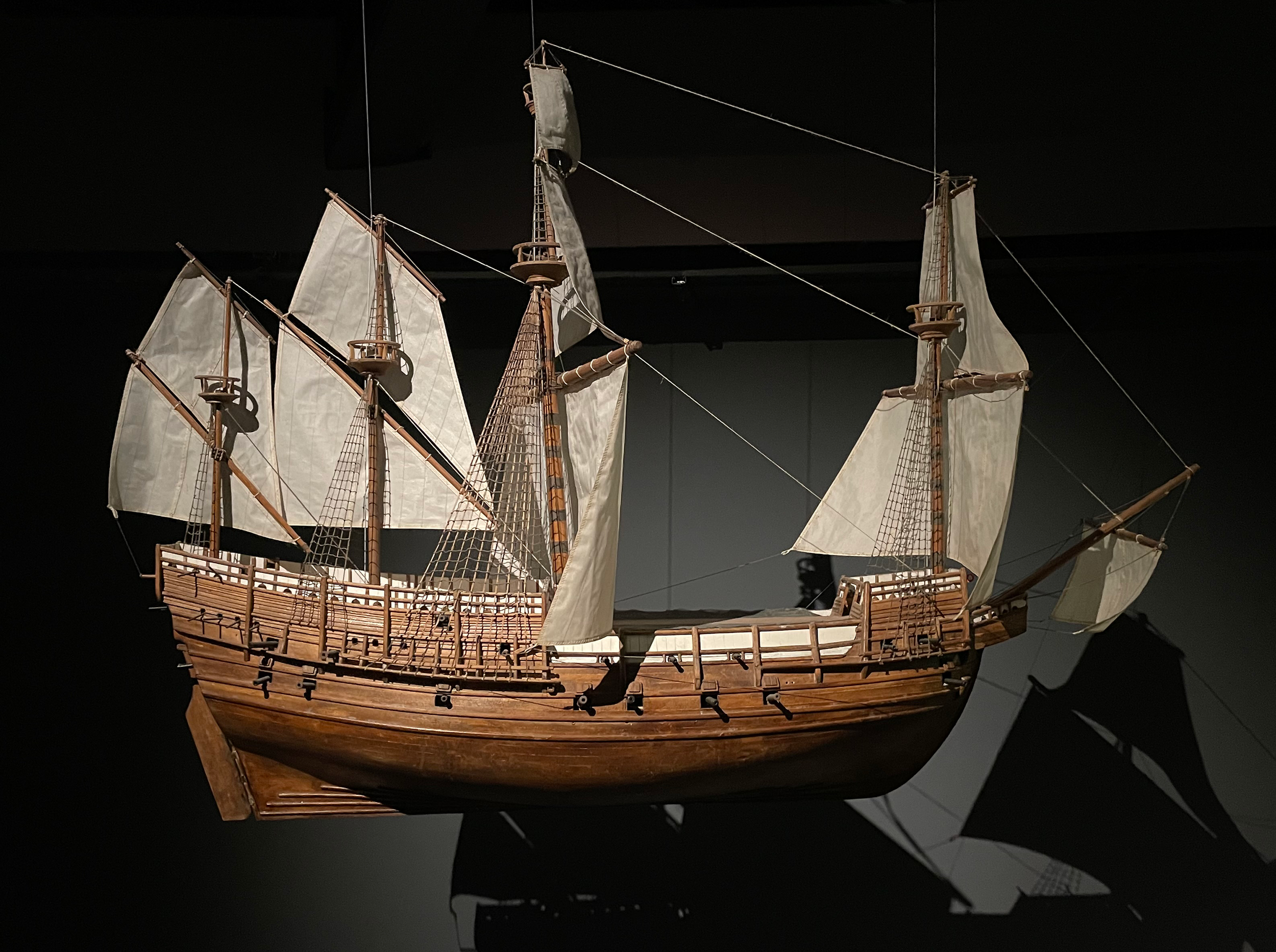
Model from the museum
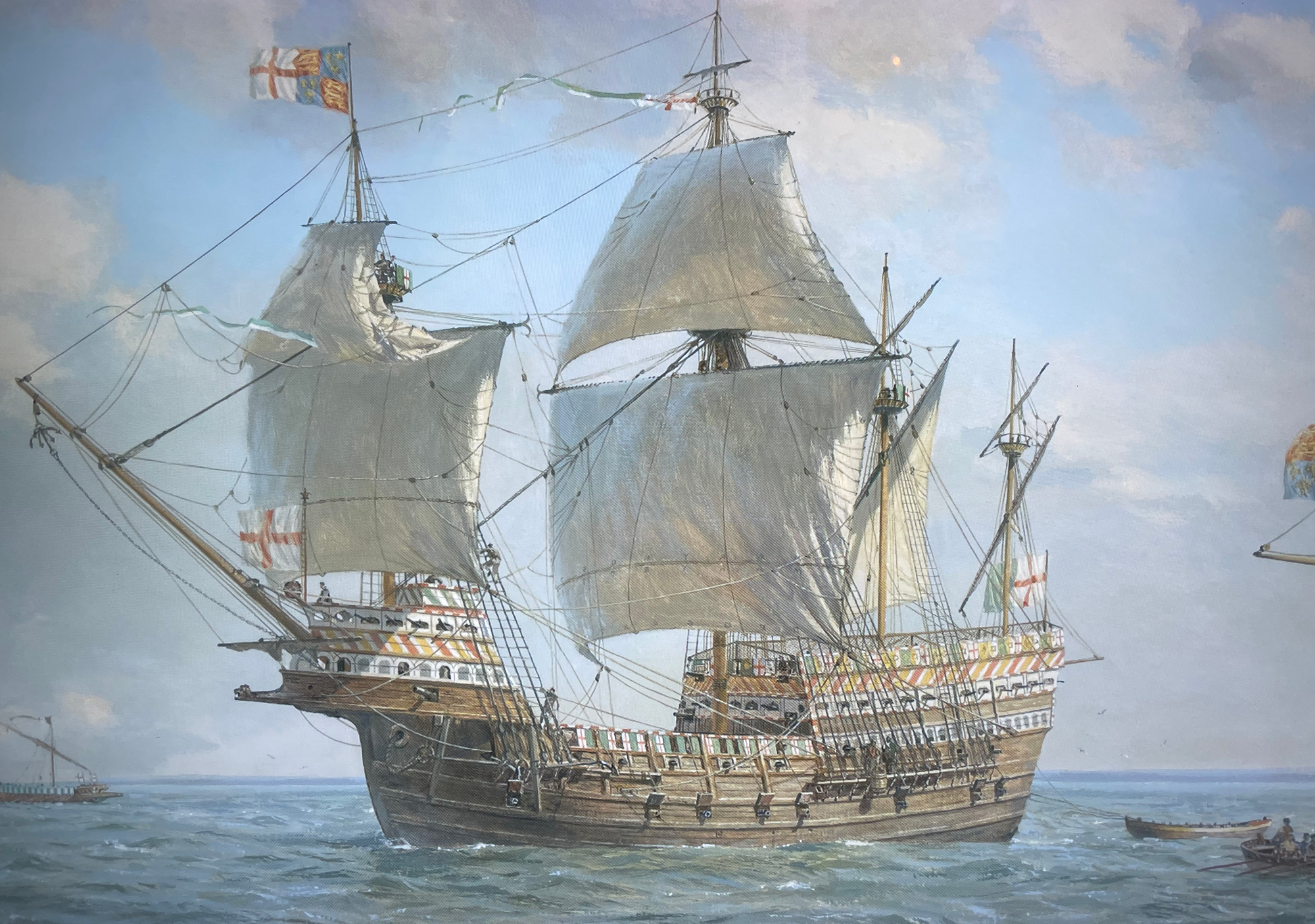
Image from the information board at the museum.
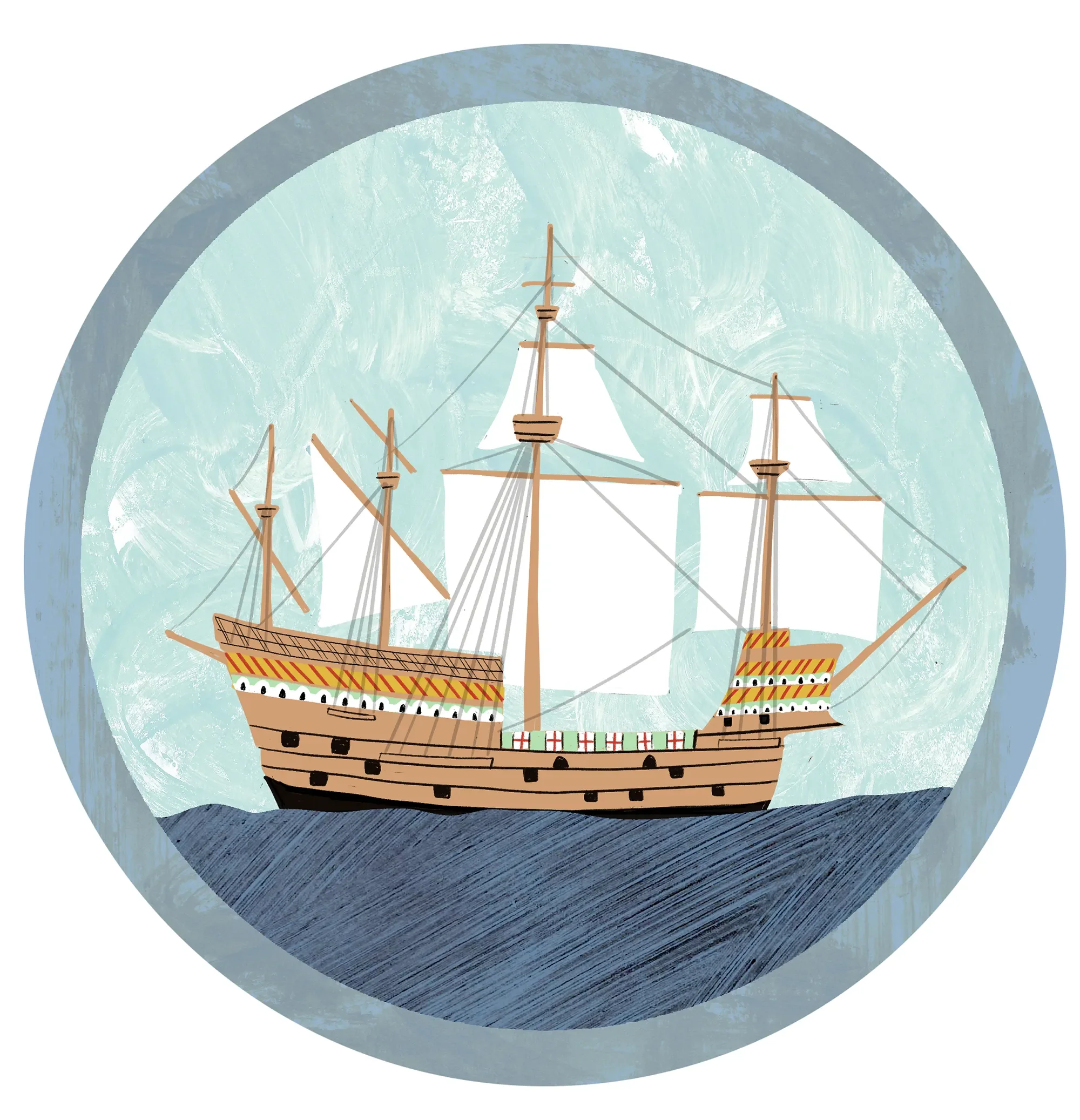
So what am I going to do? The embroidery is going to be quite compact in size so I’m probably going to choose to simplify things. This might mean that I don’t include absolutely all of the details, and so you probably won’t be able to count the decks on it anyway! But at least I now know why there are a range of interpretations of the size and shape. And I can be fairly confident that no-one know exactly what it looked like, so there is some wiggle room for artistic license! Below is a sketch of how it might look.
As for the working from home situation, I needn’t have worried. I love working from home, and the flexibility as well as the time and money saved have given me the freedom to get out more. I’ve got a years worth of Museums and exhibitions to document, so I’ll try and record a few of them here!
If you are interested in the art pass, you can find that here